Sunday, January 12, 2014

Why Write for the Stage?

For a change, money is not the answer.

Oh, one can make a buck or two writing plays, and there’s a refreshing point in one’s career where the contracts rise to the four- or five-digit level. And, if you write a hot play that does well at the Humana Festival and becomes a favorite among the regional theatres and you get a write-up in American Theatre magazine and make a dozen other perfect bank shots…you could see a pretty good year or two. Until the next flavor comes along. Winning a Pulitzer helps. Maybe.

But even the folks ostensibly making it usually have to supplant their incomes, often through teaching or, lately, writing for television…which is one reason why the writing quality for non-broadcast programs has increased so…well, dramatically.

What do you have left if you take money out of the picture? Control. And love.

Control because, unlike film or television, where you’re pretty much writing for hire, a playwright can say no. No to a wrongheaded rewrite. No to changing a line because it might conceivably upset the second cousin of someone who knows a backer. No because an actor can’t wrap their head around the words (even though they can play the rest of the part well). Never underestimate the peace of mind that comes from carrying the trump card (though it also means you have to accept the consequences). That is, until real money gets involved. Then you may have a contract, but you’re still playing three-dimensional chess.

Honestly? It always feels better to say yes: someone’s helping make your play better and handing you a gift. And you get to walk away with it, red-handed.

Which leads, oddly enough, to love. Even though you need a team to make theatre—a directors to realize your words and actors to voice them, along with a host of designers and other wizards, theatre presents a remarkably direct connection between the writer and the audience. One would think books create the strongest bonds, given the immediacy between words and thought, but books lack the feedback loop theatre provides.

See, it’s one thing for a reader to talk with you or correspond with you after the artistic transaction has occurred (i.e., they’ve read your stuff), and it’s another to hear an audience laugh, react, or, if you’ve done your job well, applaud. Your art has to happen in real time. When it works, you get this incredible rush. There’s some kind of direct line between an audience reaction and one’s euphoria receptors. (I can only imagine what it’s like for a rock musician to hit a chord and feel the air move through those speakers and the audience flow.) It’s also a serious bummer when you throw it out there and get nothing. (Which is why stand-up comedians are incredibly courageous. And maybe a little crazy.)

That’s your drama: whether or not the play will live or die, right in front of you, with everybody watching. The real kick arises from the tension, from that sense that you’re doing something genuinely dangerous, which might forever change you, for good or ill. The play might win itself a gold star in the memory achieves, or you might bury it at the bottom of the box. (A pointless gesture: the real embarrassments stick with you as much as the triumphs.)

And, once in awhile, the connection transcends getting a laugh or a gasp. Something really mysterious happens. It’s almost like the bit in a movie where the director uses slow motion to convey intensity or rapidly occurring action. The air drains from the room. There’s a kind of silence, despite the words—your words—being spoken and put in motion. You know and your cast and crew knows and your audience knows that you’re all in the zone: you’re experiencing something special, that will never, ever happen again the same way. Something akin to satori. Something…profound.

Those don’t come around all that often, but, when they do…. Man. That gets addictive. Any playwright who tells you they don’t feel a little buzzed witnessing that transaction is either being slightly less than honest (with you or with themselves) or has been doing it for so long, in so many places, that they’ve built up a certain tolerance. It happens.

Make no mistake, we’re talking dopamine, serotonin, and all those other juicy brain chemicals that make or break your day. Maybe the equation should be: control, love, and addiction. You need just one more good show. One more. Then you can call it. Say you’ve done it. Just that one special gig that’ll really fly high and wild and fully realize all of your….

Congratulations. You’re a theatre junkie.


Sunday, January 5, 2014

Instant Play Mix: Add an Event, Bake Until Firm

Nicholas Kristof writes in the New York Times this morning that one of America's first priorities this year should be seriously addressing mental illness because it affects everybody to some extent, and we won't talk about it openly. A noble premise, certainly.

But, when he's talking about how it touches all of us, he offers this paragraph: "A parent with depression. A lover who is bipolar. A child with an eating disorder. A brother who returned from war with P.T.S.D. A sister who is suicidal."


And, honestly, no disrespect intended, I thought: there it is--the modern American play. Just add a catalyst. They buy a dog--a comedy. They lose their house--a drama. Or, on the Pattersonian stage, they develop shape-shifting abilities. Which is why my plays get called weird.

Wednesday, December 4, 2013

How many again?

Note: Splattworks now has broken the 500-post mark. Time flies when one babbles incessantly.

Wednesday, November 27, 2013

Tales from the Ice(pack)...continued

Where we last left Luke Murphy, he’d been seriously injured playing hockey, did not know if he’d ever return to the sport, and began to ponder his alternatives. One of those involved taking up the pen...

From Professional Hockey Player to Published Novelist, Part Two

I really enjoyed the process: coming up with a plot, developing characters and organizing a setting, problem and conclusion. It only lasted a couple of weeks, and once we were done, I kind of missed inventing, creating my own little world and characters.

 I remember walking to my bedroom one morning and seeing my roommate’s laptop sitting on the desk, and I thought…why not?

I sat down at the desk, took the characters my girlfriend and I had created, and wrote an extension to the story we had written together.

I didn’t write with the intention of being published. I wrote for the love of writing, as a hobby, a way to pass the time. Even after my eye healed up, and I returned to hockey, I continued to hobby write through the years, honing my craft, making time between work and family obligations.

Then I made a decision to take my interest one step further. I’ve never been one to take things lightly or jump in half way. I took a full year off from writing to study the craft.

I constantly read, from novels in my favorite genres to books written by experts in the writing field. My first two purchases were “Stein on Writing”, a book written by successful editor Sol Stein, and “Self-Editing for Fiction Writers” by Renni Browne and Dave King.

I read through these novels and highlighted important answers to my questions. My major breakthrough from Stein’s book was to “Show don’t Tell”. I had to trust my readers. I even wrote that phrase on a sticky note and put it on my computer monitor.

The Self-Editing book helped me learn how to cut the FAT off my manuscript, eliminating unnecessary details, making it more lean and crisp, with a better flow. I learned to cut repetition and remain consistent throughout the novel.

I continually researched the internet, reading up on the industry and process “What is selling?” and “Who is buying?” were my two major questions.

I attended the “Bloody Words” writing conference in Ottawa, Canada, rubbing elbows with other writers, editors, agents and publishers. I made friends (published and unpublished authors), bombarding them with questions, learning what it took to become successful.

Feeling that I was finally prepared, in the winter of 2007, with an idea in mind and an outline on paper, I started to write DEAD MAN`S HAND. It took me two years (working around full time jobs) to complete the first draft of my novel.

The first person to read my completed manuscript was my former high school English teacher. With her experience and wisdom, she gave me some very helpful advice. I then hired McCarthy Creative Services to help edit DEAD MAN’S HAND, to make it the best possible novel.

I joined a critique group, teaming up with published authors Nadine Doolittle and Kathy Leveille, and exchanging manuscripts and information. Working with an editor and other authors was very rewarding and not only made my novel better, but made me a better writer.

When I was ready, I researched agents who fit my criteria (successful, worked with my genres, etc.) and sent out query letters. After six months of rejections, I pulled my manuscript back and worked on it again. Then in my next round of proposals, I was offered representation by the Jennifer Lyons Literary Agency.

After months of editing with Jennifer, and more rejections from publishers, my dream was finally realized in April, 2012, when I signed a publishing contract with Imajin Books (Edmonton, Alberta).


Even today, a year after publishing my first book, I’m stall amazed at the direction my life has taken. Never in my wildest dreams would I have believed I would someday get paid to write books. Sometimes life can be impossible to predict.

_________________________
For more information on Luke and his work, go to: www.authorlukemurphy.com, or check him out on Facebook www.facebook.com/#!/AuthorLukeMurphy or Twitter www.twitter.com/#!/AuthorLMurphy

Sunday, November 24, 2013

Tales from the Ice(pack)


This post brings a little something different to splattworks: a guest post by novelist Luke Murphy (right). He tells a good story: that of a writer discovering the craft a little later than many of us (who began producing chapbooks in crayon); and he set his goal, stuck to it, followed the recommended steps…and it paid off. Imajin Books published his novel Dead Man's Hand in 2012.

I felt Luke’s story fit well with one of splattwork’s missions—to serve authors and to discuss the trade—as it to serves as kind of a tonic for the many writers, slogging along, who wonder if the work will ever pay off. And it’s also kind of hair-raiser, dealing with one of those low points in life where the clouds look pretty dark. But Luke tells it better than I do; so I need to hand him the wheel.. I’m publishing Luke’s piece in two parts, to give him room to lay it out. Thanks, Luke, for the kind offer to step in and for putting up with me as an editor. 

The good Mr. Murphy lives in Shawville, Quebec, with his wife, three daughters, and a pug. He played six years of professional hockey before retiring in 2006. Since then, he’s worked a range of communications jobs, from sports columnist to radio journalist, before earning his Bachelor of Education degree (Magna Cum Laude).

For more information on Luke and his work, go to: www.authorlukemurphy.com, or check him out on Facebook www.facebook.com/#!/AuthorLukeMurphy or Twitter www.twitter.com/#!/AuthorLMurphy


From Professional Hockey Player to Published Novelist, Part I

It can almost be said with certainty that I didn’t follow the path of the average writer. As a child, I never dreamed of writing a best-seller, never aspired to write the next classic novel, I wanted to be an NHL superstar…period. In fact, the only time I ever thought about writing was when my teachers at school made me.

In 2000, my second year of pro hockey, after a decent training camp with the Louisville Panthers of the American Hockey League, I was sent to play in Oklahoma City. I know, hockey in Oklahoma, who would have thought, right?

I was having a very good preseason when in the third exhibition game, disaster struck.

I was forechecking on a Tulsa Oiler defensemen, a seemingly innocent play. As he shot the puck out of his end, the blade of his stick came up from the follow-through and struck me in the left eye. I went down immediately from the contact. I don’t know how long I was out for, but when I came to, I was on all fours, staring down at a massive puddle of blood. There was no pain, but the shock of seeing the blood with my right eye, and unable to see out of my left, drew me close to panic. I was terrified.

I later found out that the results of the injuries were: a broken nose, slit eyelid, scratched cornea and deeply bruise cheekbone. I went through surgery and was sent home with a patch on my eye.

I was unable to practice or workout with my team, uncertain of my future, but all I could think about was, “will I ever be able to see out of my left eye again?” The doctors had no way of knowing until the swelling went down and the outside of my eye healed up. I was devastated, my dreams shattered, and I was at one of the lowest point in my life.

The team sent me to live with a longtime season-ticket holder and friend. So as I was sitting at home, feeling sorry for myself, I decided that I would need an alternate plan. What if my eye never healed properly? I would certainly never play pro hockey again, that’s for sure. I needed to think of what to do next with my life, in case the worst scenario transpired.

It sucked!! I hated the uncertainty. I hated not knowing if I’d ever see again, or ever play hockey again.

So what to do? Because I was working with only one eye, it gave me headaches to watch TV or read books for extended periods of time.

I had just started seeing a girl from back home that summer. She was attending French College in Montreal while I was in Oklahoma, so we communicated by phone and email. My girlfriend knew that I was an avid reader and loved books, so she asked me if I was interested in helping her write a short story for her English class. Since I had nothing else to do and a lot of time on my hands, I agreed.

I really enjoyed the process: coming up with a plot, developing characters and organizing a setting, problem and conclusion. It only lasted a couple of weeks, and once we were done, I kind of missed inventing, creating my own little world and characters.

I remember walking to my bedroom one morning and seeing my roommate’s laptop sitting on the desk, and I thought…why not?


To be continued….

Thursday, November 21, 2013

Dallas

The 22nd, and it becomes inescapable: the Kennedy assassination, 50 years ago. A before and after, where-were-you event.

I was a very young boy. In fact, the assassination may be my earliest conscious memory. There’s a fine way to start off a life: televised murder and national grieving before you know what death is. And people wonder why my work has a dark sensibility.

Here’s how the political becomes personal. At the time, my dad worked for the Spokane Chronicle. The news came over the TV or radio in the cafe where he ate his lunch, and, when the shock subsided, my father turned to the waitress and, in his droll way, asked: “Can I get that to go?”

I didn’t see him for the next three days. The newspaper staff basically lived at the office, publishing nonstop updates. I still recall the anxiety and confusion I felt. Adults—men and women—spontaneously, inexplicably weeping for reasons I couldn’t understand. This great man, dead. And, to my mind, my father missing.

I do have one weird, vivid memory from that time. Waking up early, while the rest of the household slept, and wandering out to the living room. Turning on the TV. Black and white, hearses moving slowly past blurred faces lining the street. And, for some reason, I put my hands flat against the screen, as though I might receive some kind of physical transmission. I don’t remember ever having done that, before or since. The screen seemed to sizzle.

It all gets muddled, of course. Did I see Cronkite announce the president’s death? It seems like I did, but I’ve seen the clip so many times since then, Cronkite removing his glasses and choking up, that I can’t separate the real-time event from subsequent footage.

It was frightening, of course, even though I surely couldn’t understand what was going on. I remember fear. And I remember trying not to show it because everyone was already upset. The event t became a touchstone for years of “oh no” moments. Bobby. MLK. Chicago. “This is a CBS/NBC/ABC news bulletin….”

Years later, I’d have my own chance, as a radio reporter, to become The Voice. I’m sure I announced a few deaths, but the only even I really remember was announcing we’d invaded Grenada. Grenada? Where? Isn’t that a soft drink? I suppose it had its weight, so close to Cuba. I ripped the story off the teletype, just like in the movies. I can’t tell you how somber…and marvelous…that felt. That sort of thing makes you a news junkie.

The killing marked another cultural change, one that took a while to settle in. Those various shoot-em-up films from the Fifties? Where a character gets shot, clutches, and slides to the floor, perhaps a thin, discreet trickle of blood showing? No more. Not after the president’s head explodes. “The pink mist” as the soldiers say. Coupled with the nightly televised carnage of the Vietnam War, a visceral reaction against the true horror of violence led to its hyperrealistic portrayal on film. “Bonnie and Clyde” probably set the tipping point, but a whole generation of filmmakers expressed their fury with fountains of blood, as if to scream: look at it, look at it, look at it!

Understandable, but now moviegoers watch gory torture flicks for entertainment, and mutilated bodies show up on network television, and every other week, it seems, someone with a gun flips into overload and goes full medieval on total strangers. So I’m not certain the aesthetic choice achieved the desired effect.

When the light faded from JFK’s eyes, it’s said a certain innocence went with it—an optimism and, as he would say, vigor. But it could also be said that a veil ripped away, and we saw a truer portrait America: violent, dark, paranoid, and vengeful.

The two, paradoxically, co-exist. And perhaps it’s ironic that a man who’d known his own share of loss and violence, war and illness, would unwittingly pass on a profound lesson. JFK turned out to be one World War II veteran who told his whole story.


Monday, September 2, 2013

First Dog

I read a moving piece in yesterday's New York Times, in which a woman recounts visiting her grandmother, who, unbeknownst to her, lived not far away. It's a fine stretch of writing (which you can read here), but the descriptions of the visit, the home, the atmosphere, brought back not some long-lost relative (though, if you're out there, Frederick Lane Patterson III, I do wonder whatever it was you disappeared into), but, rather, the acquisition of my first dog.

Which became somewhat legendary in my household, told and retold for some reason, and, now that my folks have passed on, I'm free to relate it however it returns from the past. Maybe the article's description of the grandmother's home or the reserve between, more or less strangers, prompted the memory. Probably the latter, since I seem to recall not a visit to a small house, but a visit to an apartment building.

In fact, if you've ever seen "Blue Velvet," I recall a visit to that apartment building. At least from the outside...one of those 40s or 50s brick, four-story blocks of mystery, with long hallways and numbered doors reminiscent of an old hotel. Again, this is all memory, coming from someone without particularly potent recall, who can barely remember things that happened last week, much less decades ago.

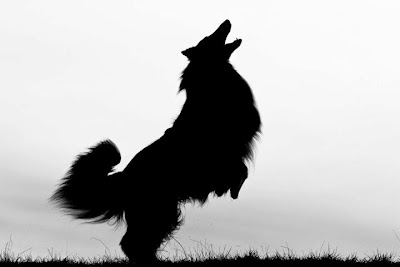
But it was, to a kid--a creepy joint, all right? Visiting at night, the street and public areas dark, and the apartment itself in deep, brown colors, with many small, framed pictures, and a black-and-white TV running: the stuff of Super 8 home movies. I was kind of a sickly kid, in a sickly family, and though we had parakeets and aquarium fish, my folks held off on a dog due to my possible allergies to fur. I don't recall what prompted the change. I remember being a little scared of dogs at the time--a few years earlier, two barking, snarling dogs had chased me and my best friend up a tree--and not being all that thrilled with the idea. Maybe my folks wanted me to get over that fear before it set too deeply. Somehow, one of parents latched on to Shetland Sheepdogs (my mother, I suspect), and we followed a newspaper ad to a family that had puppies to sell.

Which is where we veer into family legend because, per my parent's memory--I have only vague recall of this part--we set forth to find a puppy, but, when I sat down (in a padded brown rocker--I do remember that for some reason), the puppies' mother, Tessie, leapt into my lap. And wouldn't get down. Details become scrambled here, but the story ends with our taking Tessie, not the puppies, home with us. And a wonderful, gentle, perfect first dog she was, who trailed me around the house, and lay beside me on the floor as I drew or read comics or, perhaps, even as I began to add text to my notebooks full of drawings...which led to this writing thing I do.

Along the way, my family took on other shelties, achieving a four-dog peak during the 80s. Tessie, memorably, died on the day Richard Nixon resigned. My parents were relieved that Nixon exited, but a sense of personal sadness still colors references to that day. I remembered it rained, but that's not much of a reference point in the Pacific Northwest. It rained hard.

Still, looking back on the sellers (who seemed a little creepy to this kid), it makes me wonder what kind of people would sell the the mother of their pups. I mean, who sells a good dog? Was it some graceful acknowledgement that the dog found me and shifted loyalties? Did they need the money? Was that all it was about? Someone who set off to become breeder and found it didn't suit them? Were they terrible people, whom Tessie escaped from? Or were they moving and couldn't take the dogs? And what happened to the pups, who suddenly no longer had a mother? Of course, I don't remember names, and, as I recall them as being older, the sellers probably are long gone. Perhaps they'd just become too old to care for a dog. I don't remember much emotion on their part, but people often cloak these things.

Haunting. It all seems haunting. All I can really be sure of is, in one evening, I became a dog person. A very fortunate one. Maybe the dog sensed I needed her more than her puppies did.